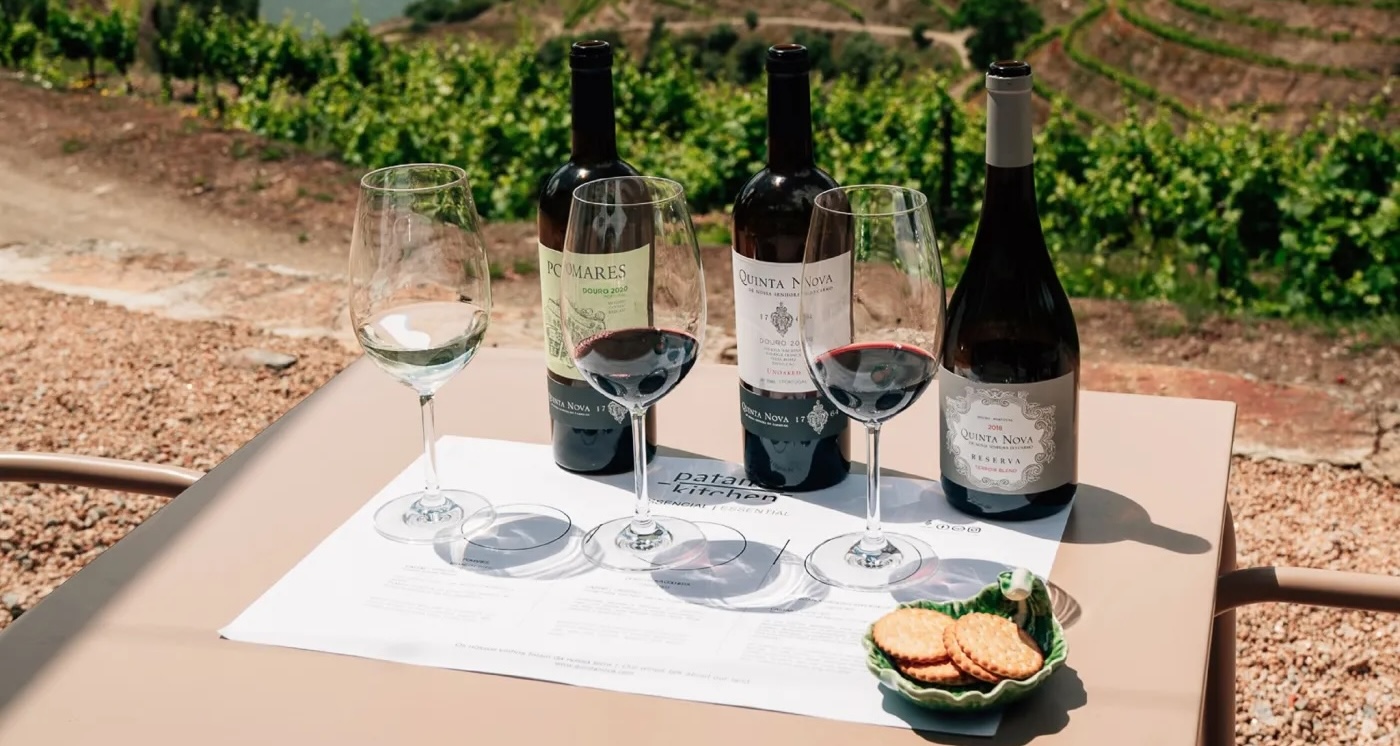
The Douro Valley is one of the oldest demarcated wine regions in the world and home to both Port wine and high‑quality DOC Douro still wines. Terraced vineyards rising above the Douro River, native grape varieties and traditional winemaking methods create a wine style you can’t really find anywhere else.
DOC Douro vs Port: What’s the Difference?
- Port wine is a fortified wine: fermentation is stopped by adding grape spirit, leaving natural sweetness and higher alcohol, and it is produced exclusively in the Douro Valley.
- DOC Douro wines are non‑fortified still wines (red, white and rosé) made from the same native grapes but fermented dry like regular table wines.
- Both share the same region and many of the same varieties; the difference is style, winemaking and purpose: Port is generally sweet, powerful and long‑lived, while DOC Douro wines range from fresh and easy‑drinking to serious, age‑worthy reds.
Key Grape Varieties of the Douro
The Douro relies on a blend of native grapes rather than single‑varietal wines.
Main red grapes
- Touriga Nacional – dark‑skinned, intense colour, aromas of dark fruits and violets, powerful tannins and structure; often considered the flagship grape.
- Touriga Franca (Touriga Francesa) – brings floral notes, red fruits and elegance; widely used in Port and DOC Douro blends.
- Tinta Roriz (Tempranillo) – adds backbone, spice and firm tannins, helping wines age.
- Tinta Barroca, Tinta Amarela, Tinto Cão, Sousão – contribute colour, acidity, complexity and spicy, herbal notes to blends.
Main white grapes
- Rabigato, Viosinho, Gouveio, Malvasia Fina, Donzelinho, Códega – native white varieties giving freshness, citrus and stone‑fruit notes, sometimes with floral or lightly creamy character, depending on winemaking.
DOC Douro Wines: Red, White and Rosé
Douro Reds
Douro red blends are the region’s dry, non‑fortified powerhouses.
- Style: from medium‑bodied, juicy and fruit‑driven to full‑bodied, structured, oak‑aged wines built for ageing.
- Typical flavours: blackberries, dark cherries, plums, baking spice, dried herbs, sometimes chocolate and earthy notes.
- Tannins & acidity: generally firm tannins and good acidity, which is why many Douro reds pair so well with grilled meat and rich dishes.
Douro Whites
Douro whites have improved dramatically and are now a serious category.
- Style: from crisp, mineral and citrus‑driven to richer, barrel‑fermented wines with more texture.
- Typical flavours: lemon, lime, green apple, white peach, sometimes floral and saline notes.
- Food pairing: perfect with fish, seafood, salads and lighter dishes.
Douro Rosé
Rosé from Douro uses the same red grapes but in a lighter style.
- Style: often pale, bone‑dry, crisp and refreshing, highlighting freshness rather than richness.
- Typical flavours: red berries, citrus zest and subtle floral notes.
Port Wine Styles: The Basics
All Port starts life as a still wine that is fortified with grape spirit, but ageing and blending create very different styles.
Ruby Port
Ruby Port focuses on fresh fruit and vibrant colour.
- Ageing: short time in large vats with minimal oxygen.
- Flavours: cherry, plum, blackberry, chocolate, spice; bold and juicy.
- Sub‑styles: basic Ruby, Reserve Ruby, Late Bottled Vintage (LBV), Single Quinta Vintage, and classic Vintage Port.
Tawny Port
Tawny Port is all about slow oxidative ageing in small barrels.
- Ageing: long time in small oak, with gradual exposure to oxygen.
- Flavours: raisin, fig, dried fruit, walnuts, toffee, caramel, coffee, sometimes orange peel.
- Sub‑styles: basic Tawny, Reserve Tawny, 10‑, 20‑, 30‑ and 40‑year‑old Tawny, and Colheita (single‑vintage Tawny).
White and Rosé Port
- White Port: made from white grapes, ranging from very dry (great as an aperitif or with tonic) to sweet dessert styles.
- Rosé (Pink) Port: a modern, lighter style with red berry notes, often served chilled or in cocktails.
Simple Tasting Guide: How to Taste Douro Wines
Step 1 – Look
- Hold the glass against a white background.
- DOC Douro red: deep ruby to purple colour; older wines may show brick or garnet at the rim.
- DOC Douro white: pale straw to golden, depending on age and oak.
- Ruby Port: opaque ruby or purple.
- Tawny Port: amber, brick or brownish edges from barrel ageing.
Step 2 – Smell
- Swirl gently and take a few short sniffs.
- For Douro reds, look for black fruit (blackberry, plum), spice, flowers (violet), and maybe oak notes like vanilla or toast.
- For Douro whites, expect citrus, apple, stone fruit and sometimes herbs or minerality.
- For Port, ruby styles show fresh red and black fruits, while tawny styles show dried fruits, nuts and caramel.
Step 3 – Taste
- Take a small sip, let it cover your whole tongue, then breathe gently through your nose.
- Think in three parts: sweetness, acidity, tannins (for reds and Port), and finish.
Food Pairing Basics
- DOC Douro reds – grilled meats, stews, game, Portuguese dishes with beef or pork, and aged cheeses.
- DOC Douro whites – fish, shellfish, salads, lighter tapas, soft cheeses.
- Ruby Port – chocolate desserts, berries, blue cheese, rich cakes.
- Tawny Port – nut‑based desserts, crème brûlée, baked apple or fig desserts, hard cheeses; also very good slightly chilled as a dessert on its own.
- White Port (dry) – chilled as an aperitif, or mixed with tonic, lemon and mint; pairs with olives, nuts and light snacks.
What to Focus On During a Douro Tasting
If you’re tasting in the Douro, you don’t need to be an expert—just pay attention to a few key things:
- Compare one DOC Douro red and one Port from the same estate to feel the difference between dry and fortified styles.
- Try at least one Douro white or rosé: they show the region is not only about Port.
- Ask which native grapes dominate the blend and how old the vines are; old‑vine (vinhas velhas) bottlings can be especially complex.
- Pay attention to texture: the grip of the tannins, the freshness of the acidity, and how long the flavours stay on your palate.