
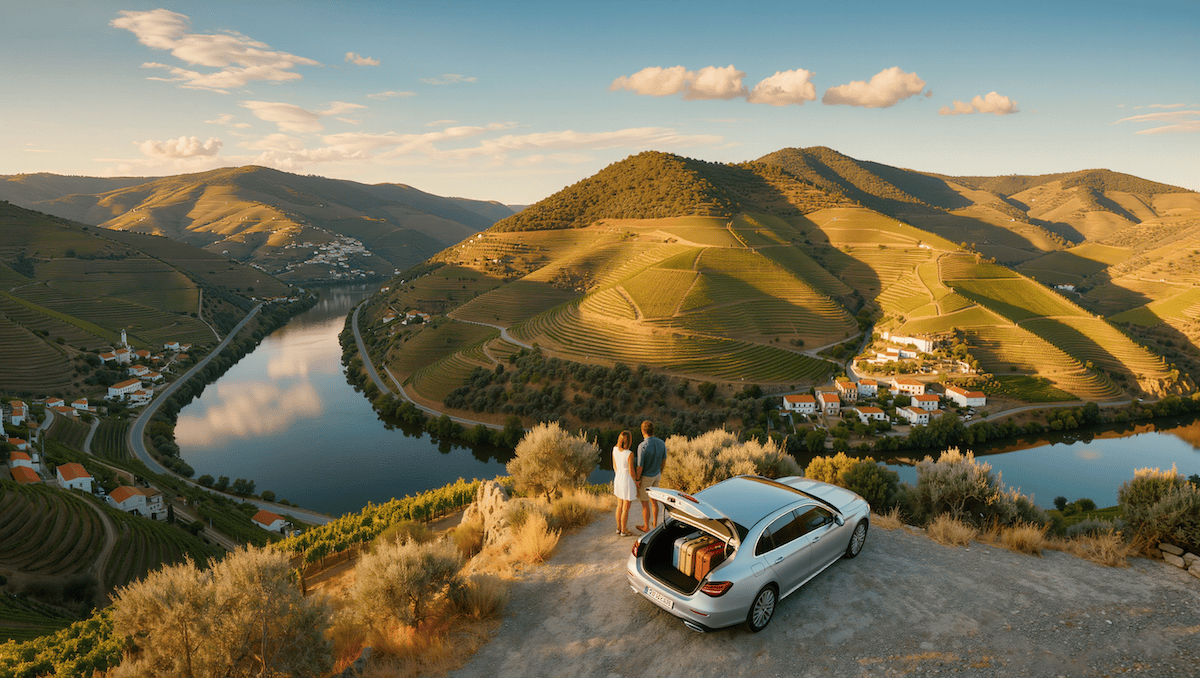
The Douro Valley lies about 100–120 km east of Porto, and you can get there by car, train, bus, organized tour, private transfer, taxi, or river cruise. Each option has different cost, travel time, and comfort level, so this guide helps you choose the best way for your travel style.
Overview of All Travel Options from Porto to Douro Valley
From Porto, you can reach the Douro Valley by:
- Car / self‑drive via the A4 motorway and N222 scenic road.
- Train from Porto São Bento or Campanhã to Peso da Régua, Pinhão and beyond.
- Intercity bus to key towns such as Peso da Régua.
- Small‑group or private guided tour from Porto (full‑day or multi‑day).
- Private transfer or long‑distance taxi.
- Full‑day Douro river cruise from Porto with return by bus or train.
In practice, most visitors either drive, take the train, or join an organized tour, sometimes combining a cruise with a bus or train for the return.
Option 1 – Driving from Porto to Douro Valley
Driving is one of the fastest and most flexible ways to travel from Porto to the Douro Valley.
Route and Driving Time
- Typical route: Porto → A4 motorway east → A24 → Peso da Régua, then N222 along the river towards Pinhão.
- Distance: around 70 miles / 110 km from Porto to Régua.
- Driving time: about 1 hour 15 minutes in good conditions; allow 1.5–2 hours with stops and traffic.
- Scenic stretch: the N222 between Peso da Régua and Pinhão is famous for its terraces and viewpoints, and is often described as one of the most beautiful roads in Portugal.
Pros of Driving
- Maximum flexibility to stop in small villages, viewpoints and multiple wineries in one day.
- Easy to add side trips to places like Amarante, Lamego or Foz Côa on multi‑day itineraries.
Cons of Driving
- Roads in the valley are narrow, winding and sometimes steep, which can be stressful for nervous or inexperienced drivers.
- Parking can be limited around popular viewpoints and quintas, especially in high season.
- If you plan to taste a lot of wine, driving yourself is not ideal.
Option 2 – Train from Porto to Douro Valley
The Douro railway line is one of the most scenic train routes in Europe and a classic way to reach the valley from Porto.
Stations and Route
- Departure in Porto: São Bento (central) and Campanhã stations.
- Main Douro Valley stops: Peso da Régua, Pinhão, and further upriver towards Pocinho.
- Operator: Comboios de Portugal (CP), the national railway company.
Example from a current planner:
- A CP train from Porto São Bento to Caldas de Moledo (on the Douro line) takes about 1h 59m and usually runs once daily on this particular section.
Travel Time and Cost
- Typical travel time Porto → Douro Valley is around 2–3.5 hours depending on the station and type of service.
- In recent examples, one‑way fares can start from around 12 USD / roughly similar in euros for longer segments.
Pros of the Train
- Extremely scenic: for long stretches the track follows the Douro River, passing vineyards, villages and steep terraces.
- Relaxed and comfortable – no driving, no tolls, no parking worries.
Cons of the Train
- Limited frequency to some valley stations; some services run only once per day.
- Most wineries are not within easy walking distance from the stations, so you will usually need a local taxi or pre‑booked transfer from Régua or Pinhão.
Option 3 – Bus from Porto to Douro Valley
Intercity and regional buses are a real, budget‑friendly way to get from Porto into the Douro towns.
Routes and Operators
- A well‑known operator, Rede Expressos, connects Porto with Peso da Régua, among other regional towns.
- In some seasons there can be several buses per day from Porto to Régua and even more in the reverse direction.
- Buses also link Régua with nearby towns such as Lamego and other parts of the valley.
Travel Time and Prices
- Typical bus journey: around 2–3 hours depending on timetable and intermediate stops.
- Local guides report one‑way tickets Porto–Régua from under 4–5 EUR on certain schedules, making this the cheapest real option apart from special deals.
Pros of the Bus
- Very budget‑friendly, with direct point‑to‑point routes into key towns.
- Comfortable coaches with luggage storage, air‑conditioning and reserved seats on many services.
Cons of the Bus
- Slower and more dependent on road traffic than the train.
- Just like with the train, you usually need a taxi or transfer for the last leg to vineyards and rural accommodation.
Option 4 – Organized Tours from Porto
Organized tours are a very popular way to “solve” the Porto–Douro journey while enjoying wineries, viewpoints and meals in a single day.
Types of Tours
- Small‑group tours: typically 6–8 guests, hotel pick‑up in Porto, 2–3 winery visits, tastings, a traditional lunch, and often a short Douro river cruise.
- Private tours: fully customized itineraries with a private driver‑guide, flexible starting time and choice of quintas.
What They Usually Include
- Round‑trip transport from Porto, often door‑to‑door.
- Pre‑booked tastings at well‑known or small family wineries.
- Scenic viewpoints along the N222 or other panoramic routes.
- Set‑menu lunch at a local restaurant or winery.
- In some cases a 1‑hour traditional rabelo boat cruise in Pinhão.
Short Real‑World Impressions
- Many travelers describe Douro day tours from Porto as “one of the highlights” of their Portugal trip, praising guides who are “knowledgeable, friendly and attentive” and mentioning that the day combines “beautiful viewpoints, authentic lunch and generous tastings” without having to drive.
- Others emphasize how small‑group or private tours felt like “spending a day with local friends”, with unscripted stops in villages, family‑run estates and viewpoints that they would never have found on their own.
Option 5 – Private Transfer or Taxi
Private transfers and taxis offer an easy door‑to‑door way to go from central Porto or the airport straight to your accommodation in the valley.
Time and Typical Costs
- Driving distance Porto → Douro Valley is around 62 miles (about 100 km).
- Average driving time is roughly 1h 10–1h 15 minutes, depending on traffic.
- Long‑distance taxi fares listed in travel planners often fall in the 130–170 USD range one way, depending on route, company and time of day.
Real Taxi Companies in Porto
These taxi companies are genuinely based in Porto and can handle longer intercity transfers if you book in advance:
- Taxis Porto – Phone: +351 220 997 336, Website: taxisporto.pt.
- Taxis Invicta – Phone: +351 225 076 400, Website: taxisinvicta.com.
- Táxi Link – Phone: +351 220 405 140, Website: taxi-porto.com.
When arranging a Porto–Douro ride, always confirm the total price, whether highway tolls are included, any waiting time, and the fare for late‑evening returns.
Option 6 – River Cruises from Porto
Douro river cruises are a slow but spectacular way to reach the valley and see it from the water.
Typical Cruise Formats
- Full‑day cruises from Porto to Peso da Régua or Pinhão, with breakfast and lunch on board.
- Many itineraries include a bus or train back to Porto in the evening, making it a complete day trip.
A common pattern described in current guides:
- Boat from Porto to Régua, free time in town, then coach back to Porto in the late afternoon.
- Or boat from Porto to Pinhão with a winery visit included, then bus back to Porto around 21:00.
Pros of a River Cruise
- The most relaxed and scenic way to enter the Douro, ideal for slow‑paced, social travelers.
- No need to think about routes, parking, or driving after tastings.
Cons of a River Cruise
- Much slower than driving or taking a direct train; most of your day is spent on the boat itself.
- Not ideal if your priority is visiting several different wineries in one day on land.
Which Way from Porto to Douro Valley Is Best?
Each option has a clear use‑case, and travel writers and local guides broadly agree on the following pattern:
- Best overall for flexibility (especially with an overnight stay): renting a car / self‑drive. You can combine scenic roads like the N222 with stops in Régua, Pinhão, small villages and viewpoints.
- Best for a one‑day, no‑stress wine trip: a small‑group or private organized tour from Porto, which includes transport, tastings, lunch and often a boat ride.
- Best for budget travelers: train or intercity bus from Porto to Régua or Pinhão, plus local taxis or transfers to wineries.
- Best for a scenic, slow experience: a full‑day river cruise from Porto into the valley with a bus or train return.
- Best for comfort if you are staying in the valley: a pre‑booked private transfer or taxi from Porto directly to your hotel or quinta.
Practical Tips Before You Depart Porto
- Always double‑check the latest schedules and prices for trains on Comboios de Portugal (CP) and for buses such as Rede Expressos, as timetables and fares change by season.
- If you plan to combine train or bus with local taxis, save a couple of taxi numbers in your phone before you travel and consider asking your accommodation or winery to pre‑book the pick‑up.
- During harvest season and summer weekends, tours, cruises and popular quintas sell out quickly, so booking transport and tastings in advance is strongly recommended.
You can now plug this text straight into your English page, tweak brand mentions (for example, link to your own tours in the tours sections), and add internal links to other Douro Valley content on your site.